Price the visit, not the hour
Most cleaning clients buy a result: a clean house on a schedule. A flat fee per visit is easier to approve than an hourly estimate that changes with the size of the mess. Write the scope into the quote — bedrooms, bathrooms, kitchen, laundry, inside appliances — and charge add-ons separately.
Add-ons and supplies
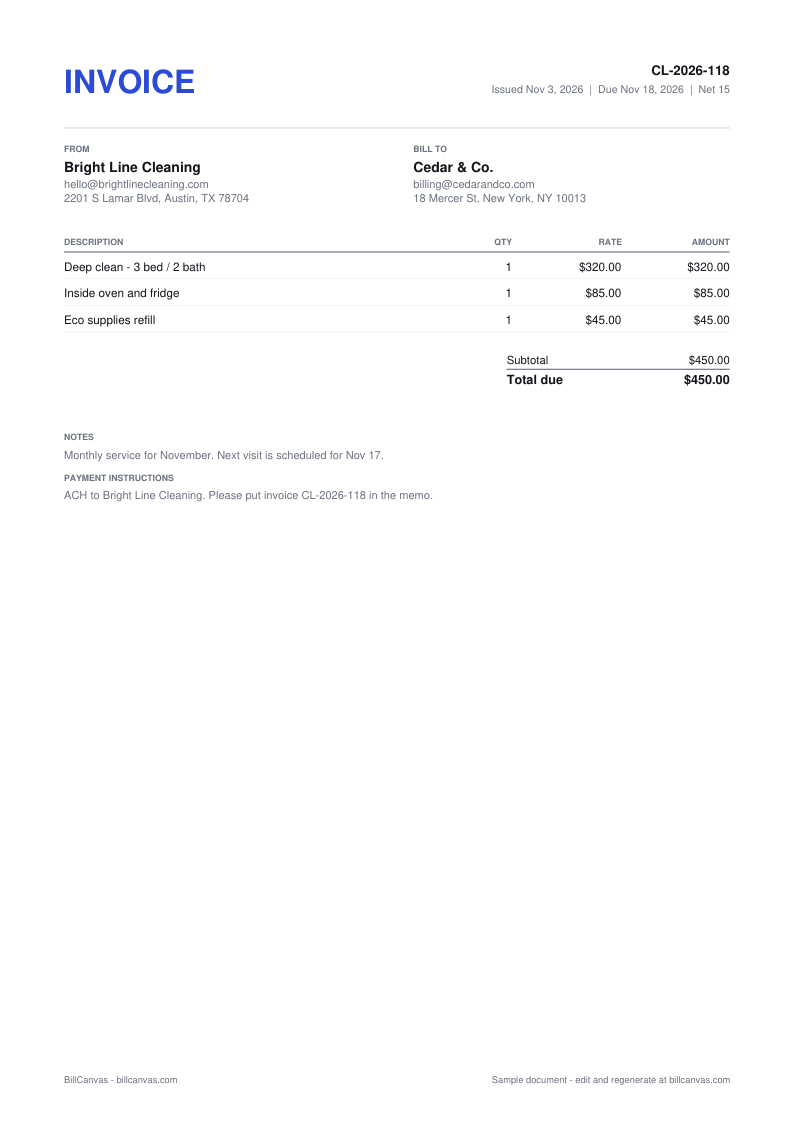
Oven, fridge, windows, garage, pet hair and post-construction are common add-ons. Charge them as their own lines so the client can see what the base price covers. Supplies can be built into the rate or billed as a refill line; if you bill them, keep it small and consistent rather than surprising the client with a large supply charge.
Recurring clients
For a weekly or monthly client, send one invoice per period and list the visit dates in the notes. Put the next visit on the invoice so the client is not guessing. If the schedule changes, adjust the next invoice rather than editing the one already sent.
Cancellations and access
A short cancellation policy prevents the worst part of recurring work: the late cancellation that leaves a gap in the day. State the notice period and the fee — 24 hours and 50% is common. Put access details (lockbox, code, pets) in the notes so the crew is not calling you from the driveway.
Tax and terms
Cleaning services are not taxable in every state, and the rules for supplies differ from the labor. Do not add a tax line until you know the treatment in your state. Net 15 is common for recurring residential work; commercial clients may want Net 30 and a purchase order.