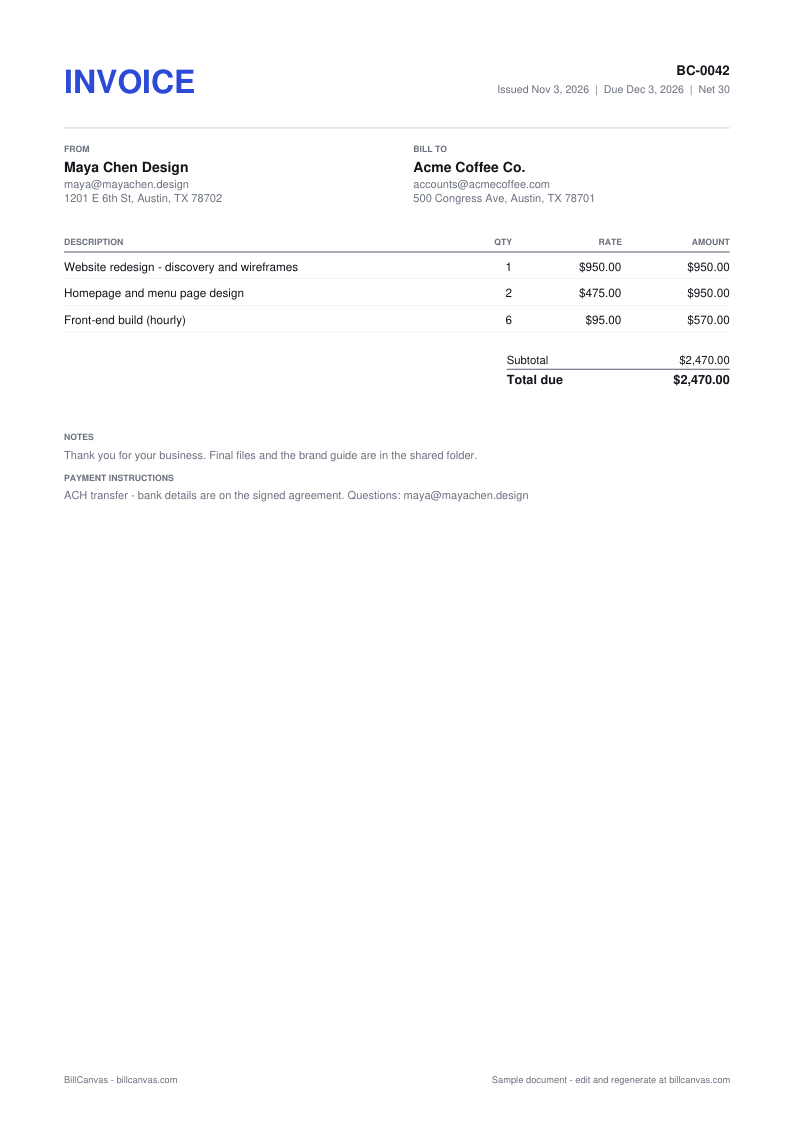
Three ways freelancers bill
Fixed fee: one price for a defined deliverable. Hourly: a rate and the hours worked, with a timesheet behind it. Per unit: a page, an image, a video, a word count. Most freelancers use a mix — a fixed fee for the core project, hourly for changes, per unit for repeatable production. The invoice should make it obvious which model applies to each line.
Deposits and balances
If you took a deposit, show it. Put the full project total in the line items, add an “Amount paid” line for the deposit, and show the balance due. Do not reduce the line items to the remaining amount; that hides the real price and makes the next invoice confusing. The deposits and retainers guide has the wording.
What to put in each description
Name the deliverable, not the effort. “Homepage and menu page design, 2 pages” is easier to approve than “design work”. If the client asked for a change, say which round it was. Vague lines are the ones that get queried.
Payment terms and late payment
Net 30 is common for business clients; due on receipt is common for small ones. Put the actual due date on the invoice, not just the terms. If you charge a late fee, say so on the quote and the invoice — a fee you introduce after the fact is hard to collect. The payment terms guide covers the reminder sequence.
Taxes and forms
Some clients ask for a W-9 before they pay; you can provide an SSN or an EIN on it. Businesses that pay an independent contractor $600 or more in a year generally issue a 1099-NEC. This is general information, not tax advice — check with an accountant for your situation.