Hourly, daily or fixed
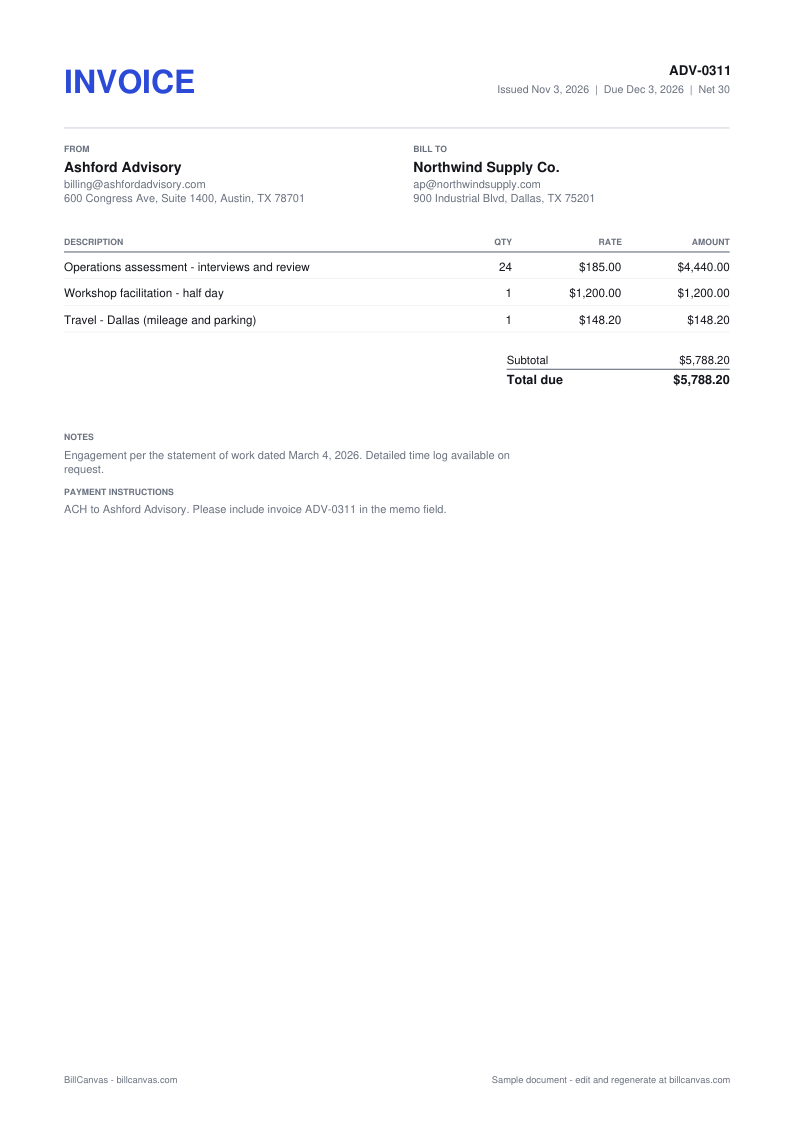
Hourly suits ongoing advisory work; a day rate suits workshops and site visits; a fixed fee suits a defined deliverable. If you bill hourly, decide whether the invoice needs a time log attached. Many clients do not ask, but the ones who do will ask on the first invoice — keep the log and offer it before they have to.
Expenses and pass-through costs
Travel, meals and materials can be billed at cost or with a markup, but only if the contract allows it. Put each cost on its own line, keep the receipts, and do not mix a pass-through into an hourly rate — it makes the invoice impossible to audit and the rate impossible to compare.
Client PO numbers
Many companies cannot pay an invoice without a purchase order number. Ask for the PO before the work starts, put it on the invoice, and reference the statement of work. If the client “will sort out the PO later”, that is usually the same client who pays late.
Net 30 and late payment
Business clients expect Net 30; freelancers often prefer shorter terms. Put the due date on the invoice and follow up on the day it passes. The payment terms guide has a three-email sequence that works without burning the relationship.
Retainers
On a monthly retainer, bill the retainer in advance and any overage after the month closes. Show the retainer period on the invoice so the client’s AP team knows what they are paying for. See the deposits and retainers guide for the wording.