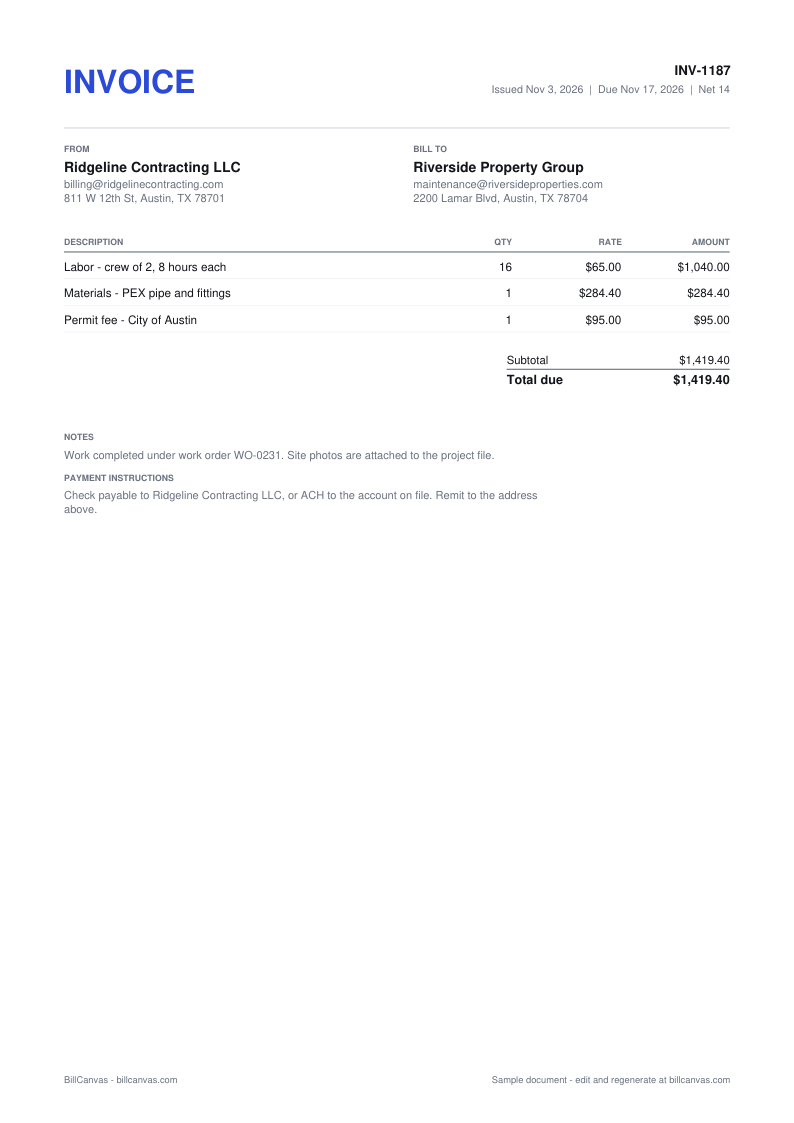
Separate labor, materials and permits
Customers accept a labor rate; they question a lump sum. Break the invoice into labor (hours at a rate), materials (with receipts on file) and permits or disposal fees. If you mark up materials, say so on the quote and keep the markup consistent — a surprise markup on the invoice is a payment dispute waiting to happen.
Progress billing and retainage
On a larger job, bill in draws against completed work instead of waiting for the end. Retainage — a percentage held back until completion, often 5–10% — is common in construction; the rules vary by state and by contract, so put the percentage and the release conditions in writing before you start.
Lien waivers
Commercial clients may ask for a lien waiver with each progress payment. Conditional waivers release lien rights only when the payment clears; final waivers release them for good. The forms and rules are state-specific — use the form the owner or lender requires, and get advice if the amount is significant.
Reference the job, not just the customer
Put the work order, project address or unit number on the invoice. A property manager paying invoices for twenty units needs to know which job this is; an invoice that only says the management company name is the one that gets lost.
Payment terms
Net 30 is common; Net 14 is common on smaller service jobs. State the due date, not just the terms. For the authorization document, use the blank work order template.