What a credit note is
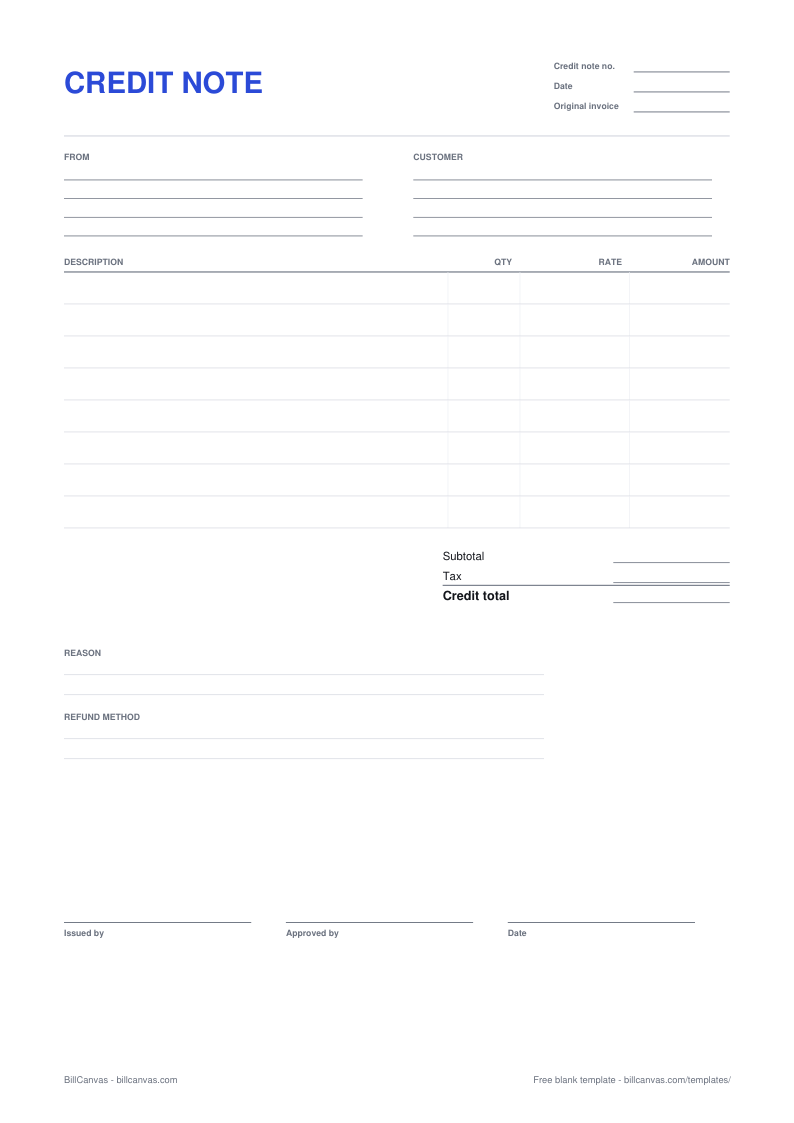
A credit note reduces the amount a customer owes. It is not a refund receipt: the credit can be applied to another invoice or paid back. It keeps the original invoice intact and gives both sides a clean audit trail — which is exactly what you lose if you edit the invoice after sending it.
When to issue one
- Goods were returned or a job was cancelled
- You overcharged, or the quantity delivered was short
- A discount was agreed after the invoice went out
- The scope was reduced and the price changed with it
- Sales tax needs to be reversed because the sale changed
Credit note vs refund
The credit note records the reduction; the refund is the movement of money. If you pay the customer back, note the method and date on the credit note or in your ledger. If the customer has another open invoice, apply the credit to that balance instead of sending money back and forth.
Numbering and references
Use a separate sequence — CN-2026-001 — and always reference the original invoice number and date. Do not reuse the invoice number or edit the original. If the correction changes the agreed price, issue a new invoice for the revised amount and credit the old one.
Tax on a credit note
If the original invoice included sales tax, the credit note should reverse the tax proportion too. The rules vary by state and by what was sold, so check the treatment with an accountant or your state’s department of revenue. This page is general information, not tax advice.