When to send a statement of account
Send one when a customer has more than one invoice open, or at the end of the month as a routine reminder. It is also useful before a collections conversation: it shows the whole balance in one place instead of making the client reconcile five emails.
How to list the invoices
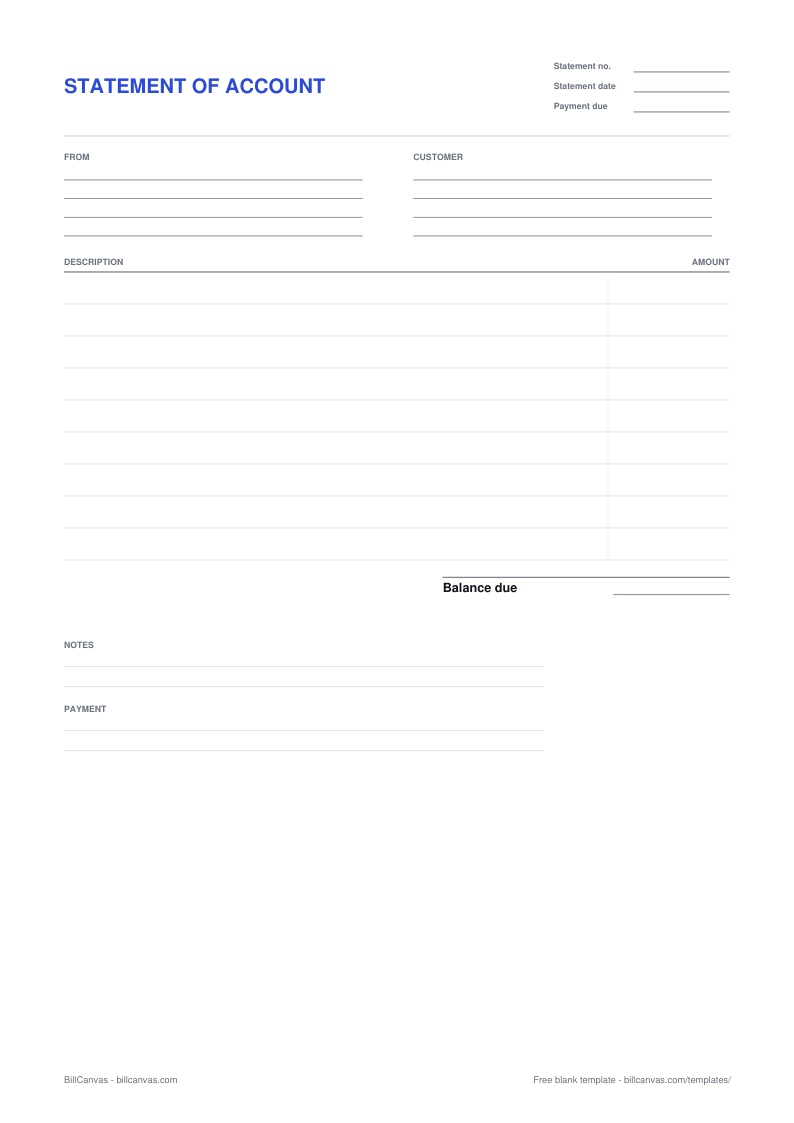
On the blank form, write each open invoice as one line: invoice number, invoice date, due date, original amount, anything paid and the balance. If the form only has a description and an amount column, the description can carry the dates: “INV-1042 · due Nov 30 · $1,200.00”. Keep the order oldest first so the aging is obvious.
Statement vs reminder
A statement is informational: here is everything open and the total. A reminder asks for a specific payment on a specific invoice. If an invoice is badly overdue, send the reminder — or both — rather than a statement on its own. The late payment guide has a reminder sequence you can copy.
Aging, without the spreadsheet
Group the balance by how late it is — current, 1–30 days, 31–60, 61–90, over 90 — if your customer is a business with an AP team. For a small client, a simple list with due dates is enough. Do not add columns the reader will not use.
Keep it consistent with the ledger
The total on the statement should match your accounting records and the invoices themselves. If a payment is missing, fix the allocation before sending the statement; a statement that disagrees with the invoice it lists costs you credibility.