What a delivery note is for
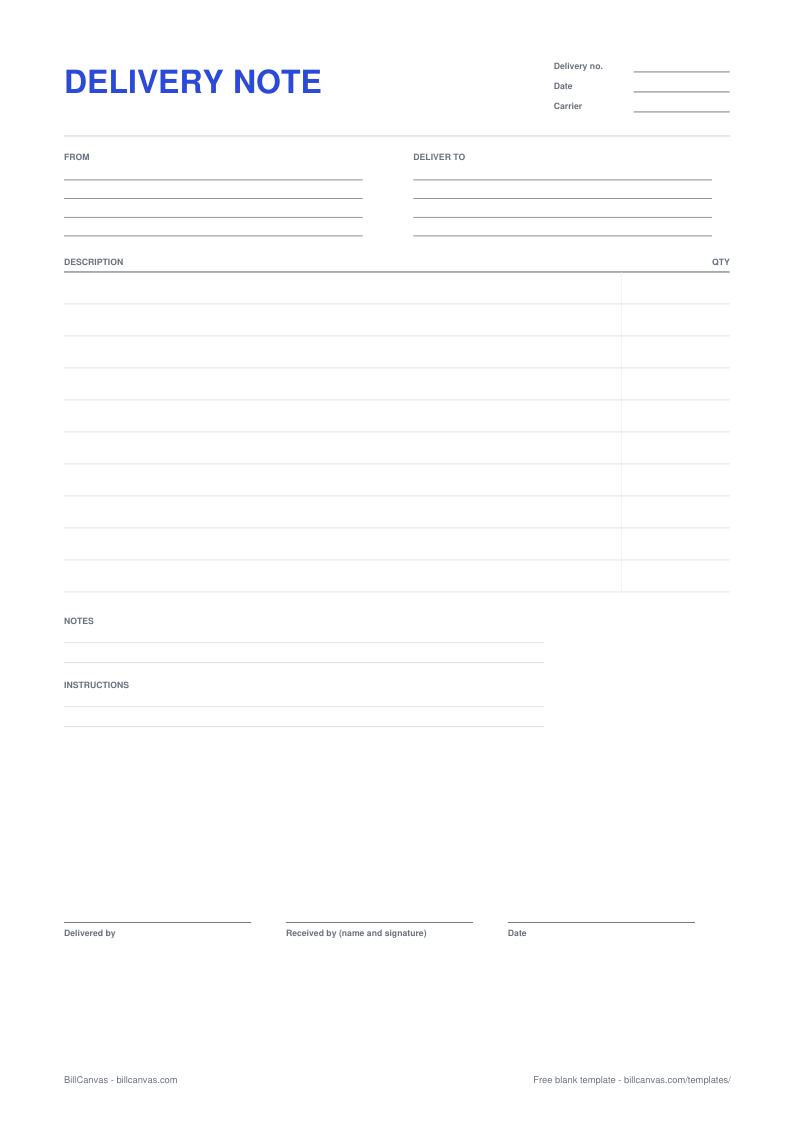
A delivery note travels with the goods. It tells the person receiving them what should be in the box, and it gives you a signed record that the goods arrived. That signature is what you use when a customer later says a delivery never happened or arrived short.
Delivery note vs packing slip
The two are often the same document. A packing slip usually includes the order number and may show prices; a delivery note is the proof-of-delivery copy and normally leaves prices off. If you ship to a warehouse or a job site, the no-prices version is the safer one to hand over.
Why leave the prices off
The person signing at the loading dock does not need to know what you charged. Prices on a delivery note invite questions about margin and can expose your pricing to a third party. Keep the invoice separate and match the two by number.
Get the signature right
Ask the receiver to print their name, sign and date it. Note the number of boxes and any visible damage on the sheet before they sign — “2 boxes received, one corner crushed” is enough. Photograph the signed note if the goods are valuable.
Match it to the invoice
Reference the order or invoice number on the note. When the invoice goes out, the delivery note is the evidence that the goods were received, which is exactly what a client asks for when a charge is queried. For the invoice itself, see the blank invoice template.