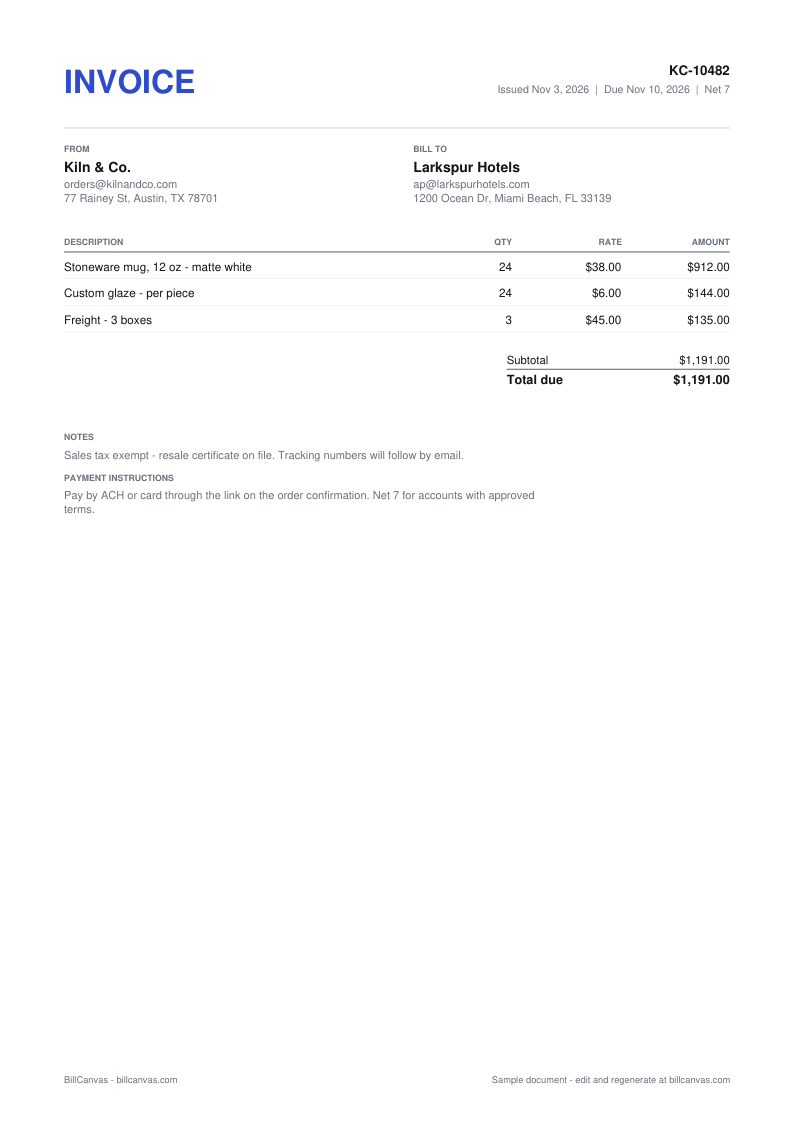
Make the product lines match the order
Use the product name the buyer ordered, the variant, the SKU if they use one, and the quantity. On a wholesale order, a mismatch between the packing slip and the invoice is an automatic query. If the buyer’s PO has its own line numbers, keep the same order on the invoice.
Shipping and fulfillment
Charge freight as its own line rather than burying it in the unit price. State who arranged the carrier and whether the shipment is insured. If the order ships in several boxes, say how many and give the tracking numbers in the notes or by email.
Sales tax and resale certificates
A wholesale buyer may give you a resale certificate, which can remove sales tax from the order. Keep the certificate on file, check that it is valid for the state, and put a short note on the invoice — “Sales tax exempt — resale certificate on file” — instead of a zero tax line. If you are not sure, collect the tax and let the buyer claim it back; do not guess.
Returns and credits
Do not edit an invoice after it has been sent. If a customer returns goods, issue a credit note for the returned amount and keep the original invoice intact. That way the paper trail matches the payments and the inventory.
The consumer version
For a single consumer order, the receipt or order confirmation usually does the job; a full commercial invoice is what business buyers need. The same generator works for both — turn off tax if it does not apply, and keep the order number consistent.