What counts as a reimbursable expense
The test is usually ordinary and necessary for the business, allowed by the expense policy, and backed by a receipt. Keep the policy simple: what is covered, what needs pre-approval, and what the limit is for meals and hotels. A report that follows a written policy is much easier to approve than one that asks a manager to decide after the fact.
Receipts and record keeping
Many businesses ask for receipts for anything over $75, and for all lodging and airfare regardless of amount. Photograph the receipt when you get it and put it in the same folder as the report; paper receipts fade, and a report without support is the one that gets sent back.
Mileage
For a car, log the date, the from and to addresses and the business miles. Use the current IRS standard mileage rate or your actual costs — whichever your policy says — and do not switch methods midway through the year without checking. A mileage log is a separate document from the receipt pile; keep both.
Reimbursement vs invoicing the client
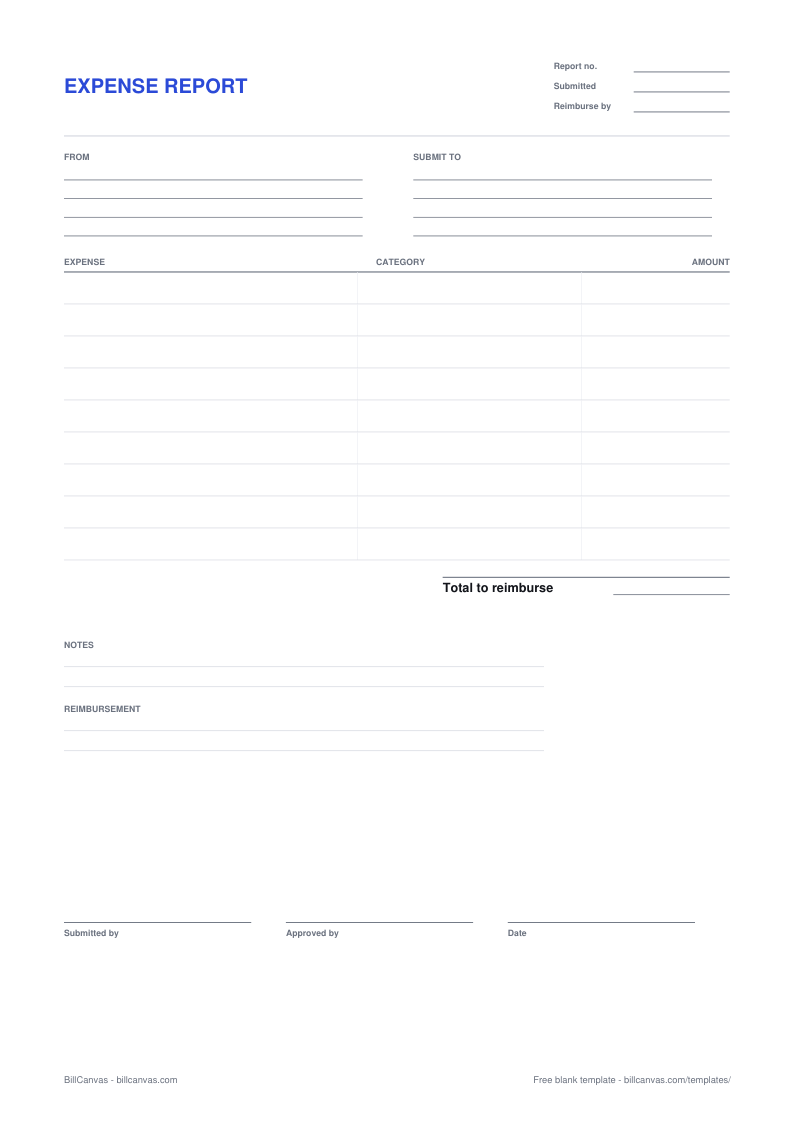
If you are an employee or contractor being reimbursed by the business, this report is the request. If you are a freelancer passing a cost through to a client, the cleaner route is usually a line item on the invoice with the receipt attached, not a separate expense report. Either way, say on the document whether the amount is a pass-through at cost or includes a markup.
Close the loop
Get the approval signature before you pay yourself back or submit the next report. If the company uses accounting software, attach the approved PDF to the reimbursement entry so the paper trail matches the payment.