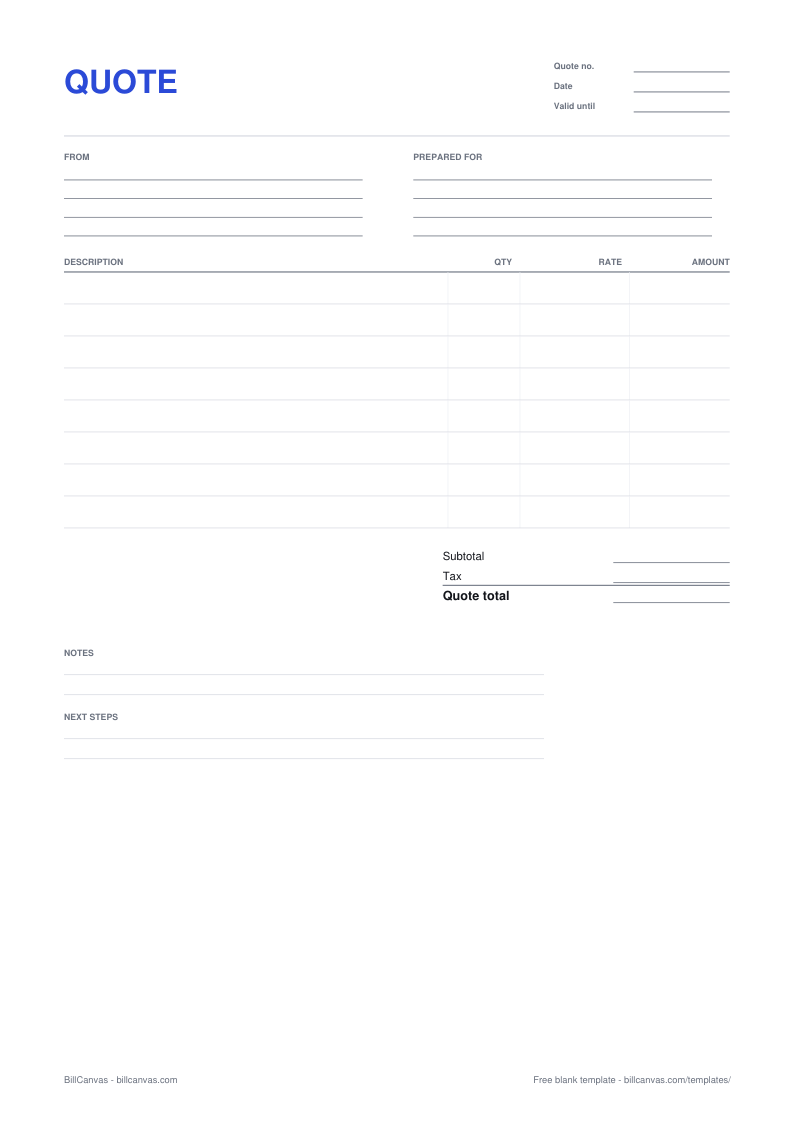
What belongs on a quote
A quote is an offer: this work, this price, for this long. The client should be able to approve it without a meeting. That means a fixed scope, a price, a validity date and a clear next step. If the price depends on unknowns, say what those are and how you will price them if they change.
Quote, estimate or proposal?
Clients use the words interchangeably. A quote usually means a fixed price for defined work; an estimate means the price may move; a proposal adds the approach, timeline and team. Whichever word you use, put the price, the scope and the validity date in writing. The difference between a quote and an invoice is covered in the document guide.
How long should a quote be valid?
Thirty days is common for services. Use a shorter window when prices move — materials, travel, subcontracted labor — and say what happens after it expires. A quote that says “valid for 30 days” and shows the actual date is much easier for a client to act on than “valid for 30 days” alone.
Turn an approved quote into an invoice
When the work is done, do not retype it. The quote generator has a “Create invoice” button that carries the line items, quantities and rates into a new invoice and references the quote number, so the paper trail stays in order.
Five things that get a quote approved
- One total, with the main deliverables broken out
- What is included and, just as important, what is not
- A start date and a delivery date
- A validity date and a deposit amount
- A single next step: “Reply to approve and we will send the deposit invoice.”