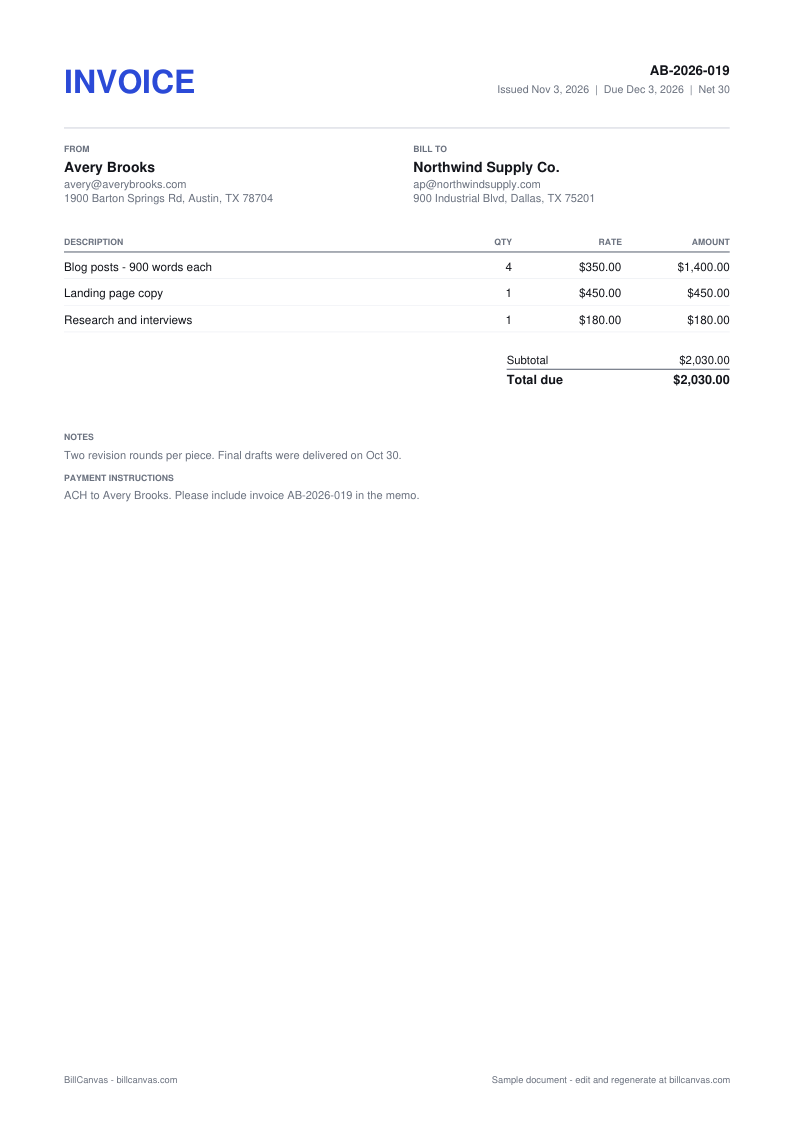
Per word, per piece or a project fee
Per word works for predictable formats — blog posts, news, product descriptions. Per piece works when the scope is clear and the word count is a guide, not a contract. A project fee works for a landing page or a campaign where the value is the result, not the length. The invoice should say which model applies to each line.
Research and interviews
Research, interviews and travel can be included in the per-piece rate or billed separately. If they are separate, say so in the quote and give the hours or the flat fee. A client who sees “research” on the invoice without a number will ask what it covers.
Revisions and scope
Two revision rounds per piece is a common default. Extra rounds, new angles or a changed brief are new work; price them before you start. Keep the email where the client approved the brief so the scope is not relitigated at invoice time.
Rights and bylines
The fee usually buys the agreed usage, not all rights forever. If the client wants to republish, syndicate or use the copy in ads, put the rights and any extra fee in the contract. For ghostwriting, agree whether you get a byline or a portfolio credit.
Tax and terms
Writing is a service; sales tax treatment varies by state. Business clients may ask for a W-9 and issue a 1099-NEC at the end of the year. Net 30 is standard, with a deposit for large projects.