When to use a purchase order
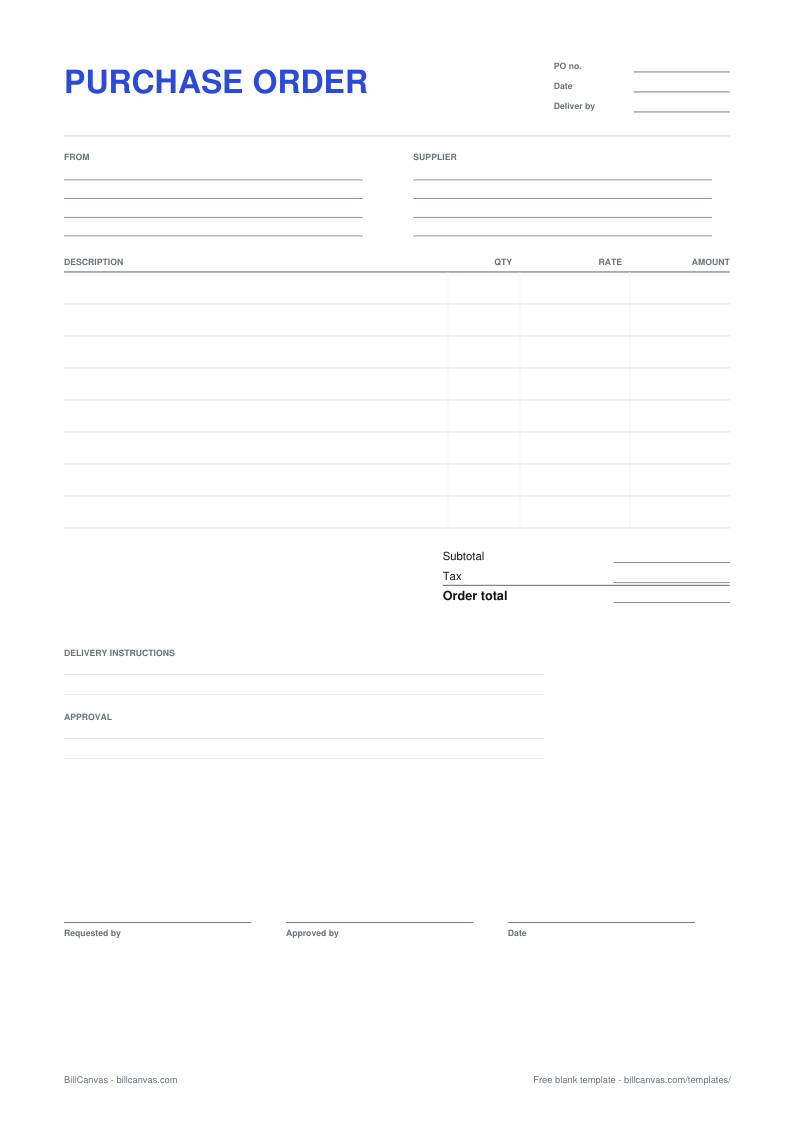
Use a PO when you are the buyer and you want the order, price and delivery terms in writing before the supplier acts. They matter most for repeat orders, anything bought on account, and purchases that need someone else’s approval. For a one-off coffee run, a PO is paperwork for its own sake.
PO vs invoice
The buyer sends a purchase order; the seller sends an invoice. The PO number on the invoice is what lets accounts payable match the three documents — PO, delivery note and invoice — before releasing payment. If your supplier does not put the PO number on their invoice, ask them to; it is the most common reason a clean invoice sits unpaid.
Numbering and approval
Use a sequence that includes the year, such as PO-2026-014, and keep a log of what each number was for. Put the approver’s name on the document. A PO without an authorized signature is a suggestion; a signed one is an instruction the supplier can rely on.
Delivery terms
Write down who pays freight, where the goods are handed over and when. “FOB destination” means the seller carries the risk until delivery; “FOB origin” passes it earlier. If the order can ship in parts, say whether partial delivery is acceptable. These few words prevent most delivery disputes.
Keep it with the invoice
When the invoice arrives, match it to the PO and the delivery note. If the price or quantity differs, query it before paying. To correct an invoice that has already been paid, use a credit note rather than editing the original.