Per-page design vs a fixed project
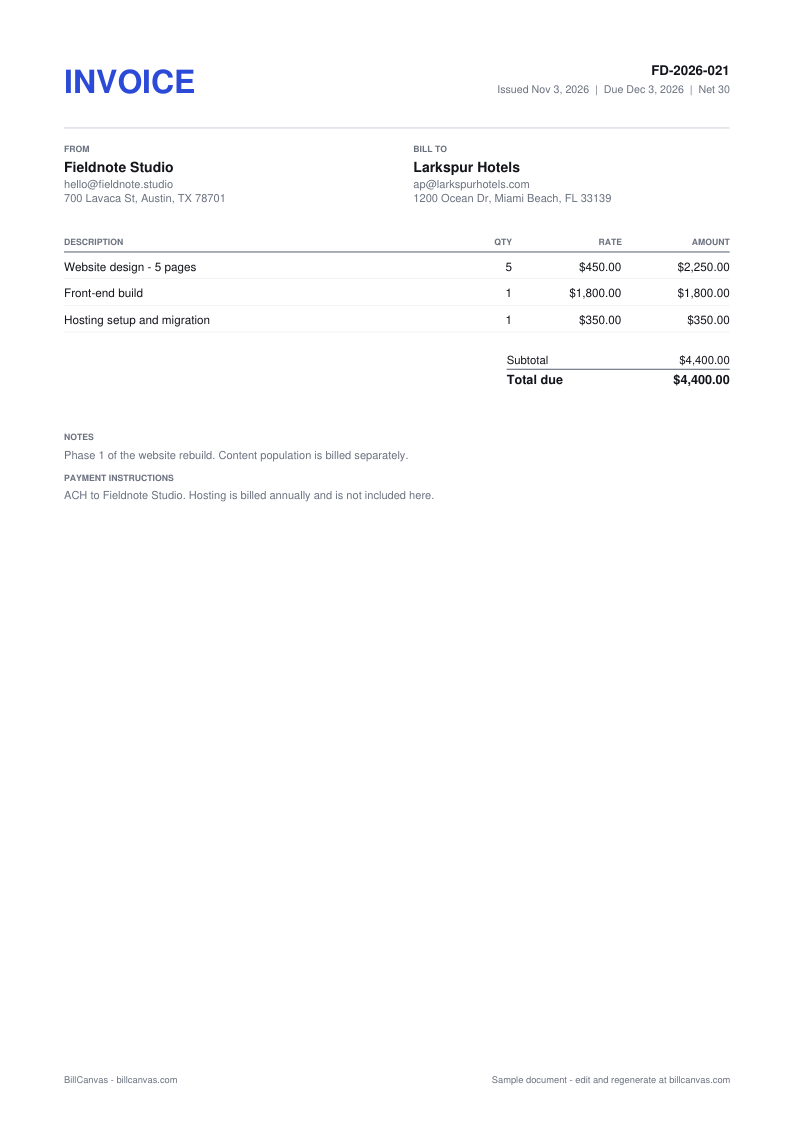
A per-page rate makes the scope easy to see: five pages at $450 is a number the client can check. A fixed project fee is better when the design work is exploratory. Whichever you use, define what counts as a page and how many revision rounds are included.
Build, hosting and maintenance
Keep one-time setup separate from recurring hosting and maintenance. A client who pays a hosting setup fee should not assume hosting is included forever. Put recurring fees on their own annual or monthly invoice, and say clearly what the one-time line covers.
Milestones and deposits
Large website projects are usually split into a deposit and one or two milestone payments. Show the full project total, the amount already paid and the balance due. If the client paid a deposit before the project started, do not reduce the line items to the remaining amount.
Revisions and scope
Every website project has a moment when “one small change” becomes a new page. State the revision rounds included and the rate for extra work. A change order signed before the extra work starts is easier to collect than an hourly surprise on the final invoice.
Tax and terms
Web design is a service, and sales tax treatment varies by state. Hosting, domains and third-party services may be billed as pass-throughs or resold; check how your state treats each. Net 30 is standard for business clients, with a deposit for new ones.